HOLISTIC SEO
MASTERMIND
Menu+
Invitation applicationA ticket shape representing an invitation application.Request an invitation
SEO COURSE / ADVANCED SEMANTICSCREATED BY KORAY TUĞBERK GÜBÜR

Topical Authority course

Learn the
shape of meaning.

An advanced Semantic SEO course for practitioners who want to understand how query processing, context, topical coverage, and content networks work together.

40+ HOURS OF LECTURES, EXPLANATIONS & EXAMPLESExplore the official course

The premise

To rank a source,
a search engine needs to
understand what it means.

Topical Authority is a way of thinking about that understanding. It moves beyond choosing terms in isolation and asks how a source answers a complete territory of questions with clear, connected information.

The course examines the semantic logic beneath the work: how queries carry context, how documents are interpreted, and how a site can become easier to retrieve, evaluate, and trust.

What you study

Build a map.
Then make it live.

Four connected areas form the backbone of the course. They are designed to be studied as one system, not as disconnected tactics.

01

Semantic search engines

Study how search engines process, retrieve, and extract information—then use that model to make more intentional decisions.

02

Query semantics

Work with context, relatedness, distinctiveness, query weights, and the relationships that change what an answer needs to do.

03

Topical maps

Learn to model a subject as a connected territory: its central entities, supporting questions, boundaries, and information gaps.

04

Semantic content networks

Turn the map into connected, structured content that creates a more coherent and useful source over time.

The lecture atlas

From the mechanics
to the method.

This is the learning sequence behind the work—not a list of isolated tricks. Each area gives the next one a stronger foundation.

  1. 01

    Search engine foundations

    • Information retrieval and indexing
    • Ranking, re-ranking, and relevance
    • How search systems interpret a source

    WORKING OUTPUTA working model of the machine you are optimizing for.

  2. 02

    Queries, intent, and context

    • Query semantics and search intent
    • Relatedness, distinctiveness, and query paths
    • How context changes the required answer

    WORKING OUTPUTA query network—not a disconnected keyword list.

  3. 03

    Entities and meaning

    • Entities, attributes, predicates, and frames
    • Lexical relationships and contextual domains
    • Turning concepts into retrievable information

    WORKING OUTPUTA clearer semantic specification for every page.

  4. 04

    Topical map architecture

    • Source context and the central entity
    • Topical borders, coverage, and prioritization
    • Core and outer sections of the map

    WORKING OUTPUTA sequenced publishing plan with explicit boundaries.

  5. 05

    Semantic content networks

    • Document templates and heading structures
    • Internal links, anchor context, and crawl paths
    • Connecting articles into a coherent source

    WORKING OUTPUTA network in which every document has a job.

  6. 06

    Quality and authority signals

    • Information gain and answer precision
    • Source, author, and historical signals
    • Consolidation, revision, and consistency

    WORKING OUTPUTA quality-control system that survives publication.

  7. 07

    Technical implementation

    • Canonicalization and indexability
    • International and multilingual structure
    • Performance, crawl efficiency, and monitoring

    WORKING OUTPUTA site architecture that supports the semantic model.

  8. 08

    Experiments and case studies

    • Reading results without confusing correlation
    • Applying the framework across industries
    • Building the next test from observed evidence

    WORKING OUTPUTA repeatable process for testing your own assumptions.

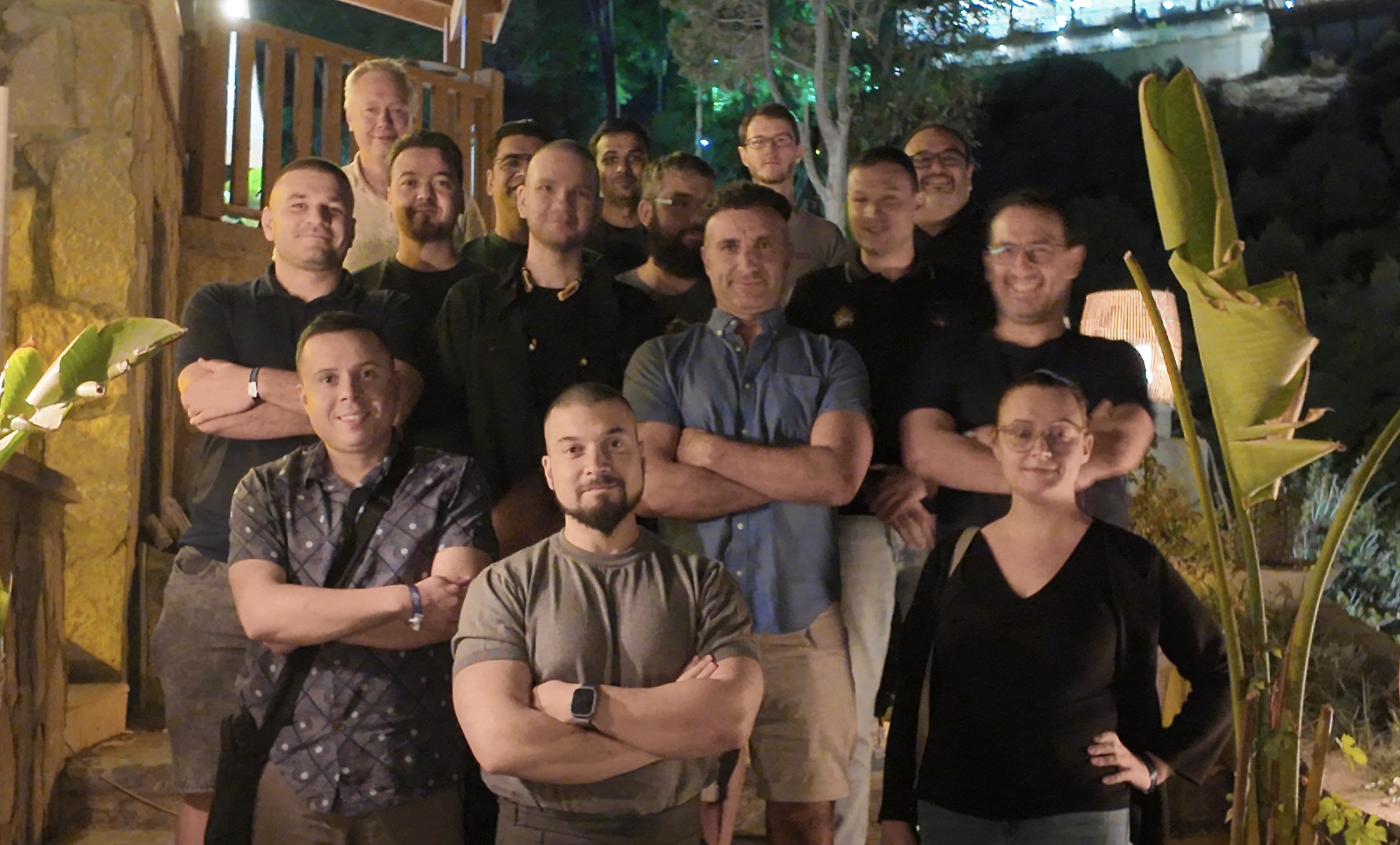
Koray Tuğberk Gübür with members of the Holistic SEO community

Beyond the recording

A course built from
observed work.

The framework grew through repeated experiments across sites, languages, and industries. The official course story documents more than 30 SEO case studies and work across 60 successful websites.

Read the course story
Koray Tuğberk Gübür speaking with a member of the SEO community
Questions move from the lecture into the room.

Learner field notes

Not quick.
Worth returning to.

Public reflections from practitioners who studied the material. Their words have been shortened or paraphrased for clarity; each note links to its source.

01 / 03

A structured way of thinking about SEO—dense enough that I went through it twice to understand how much was inside.

Jean-Christophe ChouinardCourse participant · condensed from a public reviewSource ↗
02 / 03

The lectures reward pausing, replaying, and taking serious notes. The real learning time extends far beyond the video runtime.

James Dooley / FatRankIndependent course review · paraphrasedSource ↗
03 / 03

The course and continued support gave us a framework to bring a site back into the rankings.

Abdul LatifCourse participant · condensed from a public postSource ↗

A serious learning room

Depth requires
a longer attention.

  1. 01

    Bring the foundations

    The course is built for people who already understand the basics of SEO and want to go deeper into how search engines make sense of the web.

  2. 02

    Stay with the theory

    This is not a collection of shortcuts. It asks for patience with linguistics, information retrieval, and the ideas behind the implementation.

  3. 03

    Practice the model

    The point is to apply the reasoning to a real site, not simply collect a new vocabulary for search.

Three places for the work

Study the model.
Test the system.
Bring the question.

Advanced semantics.
Made practical through the work.

Visit the official course